Posted on: Oct 30, 2026
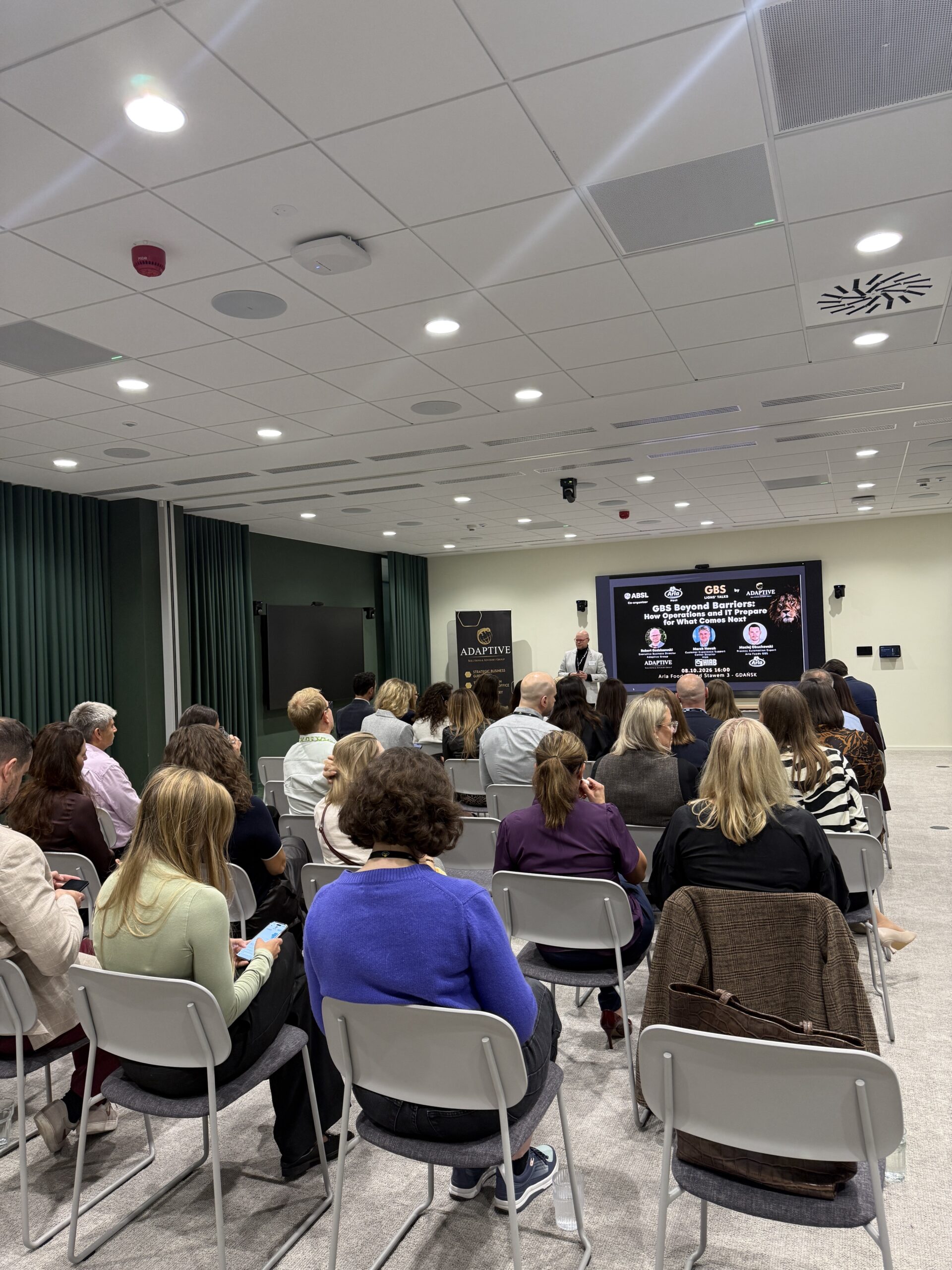
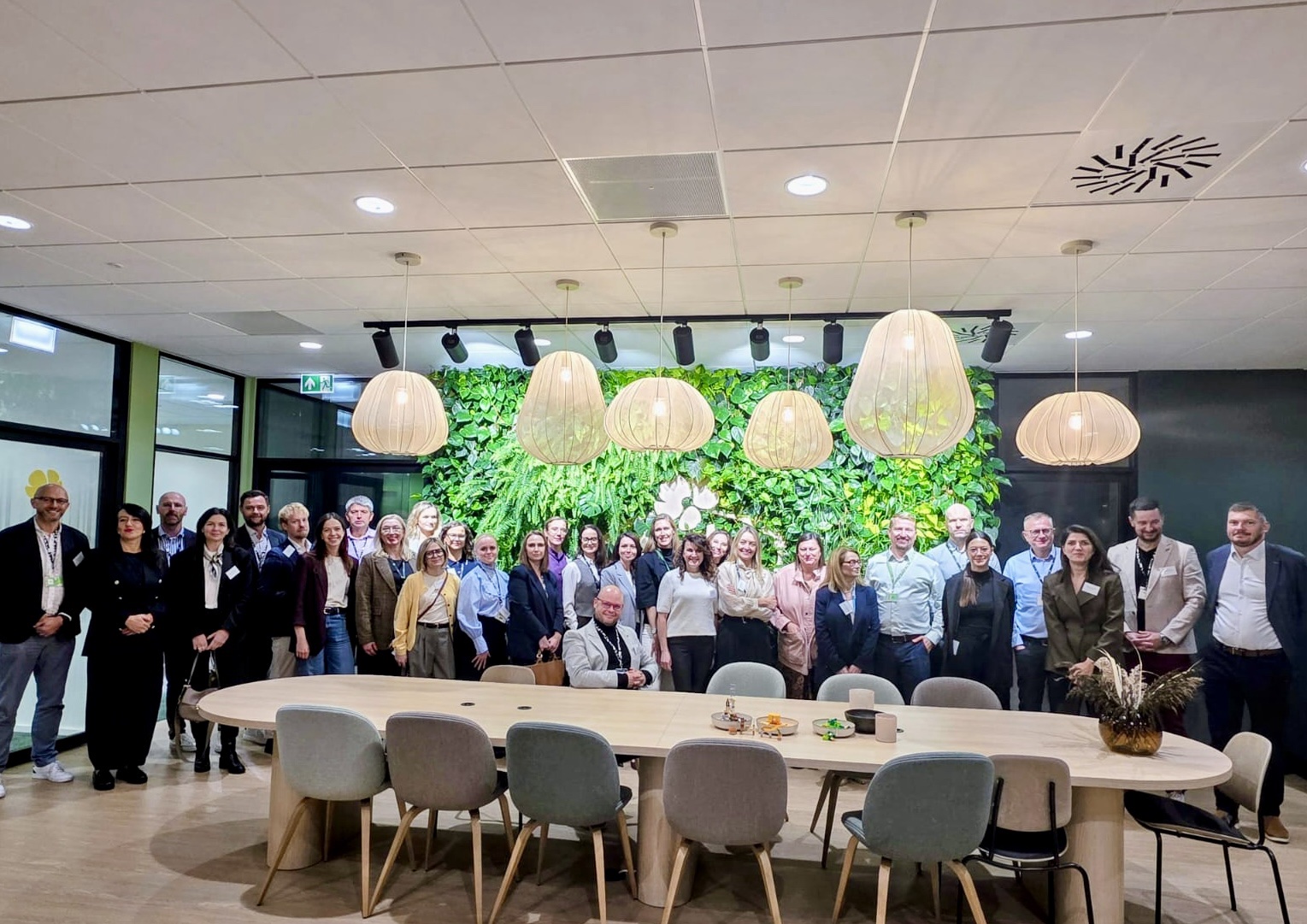
For years, technology barriers slowed Global Business Services down. Long IT backlogs, lost requirements and low adoption were the price of doing business. On 8 October 2026, Arla GSS hosted the latest edition of GBS Lions’ Talks by Adaptive in Gdańsk, co-organized with ABSL Poland. The event asked a simple question: what happens when AI removes those barriers, and are Operations and IT ready for it?
Three speakers, three perspectives: a consulting view of the structural shift, a practitioner’s story of bottom-up automation at Hiab, and Arla’s model for building Business-IT partnerships at scale.
Setting the scene: Arla and its Global Shared Services
The evening opened with a welcome from Artur Świętoń, Head of GSS at Arla, who gave the audience a snapshot of the host organization. Arla is a farmer-owned cooperative. Together with DMK Group, it represents more than EUR 20 billion in revenue, over 11,000 owners and nearly 29,000 colleagues. Arla now ranks as the fourth-largest dairy company globally, and its competitors are consolidating through mergers and acquisitions. The pressure to operate efficiently and adapt quickly is therefore very real.
The Gdańsk hub reflects that ambition. It employs around 890 people from 27 nationalities, with an average age of 32 and an employee engagement score of 82. It is a young, international team that is well placed to experiment with new ways of working.
The shift from IT-built to Business-built solutions
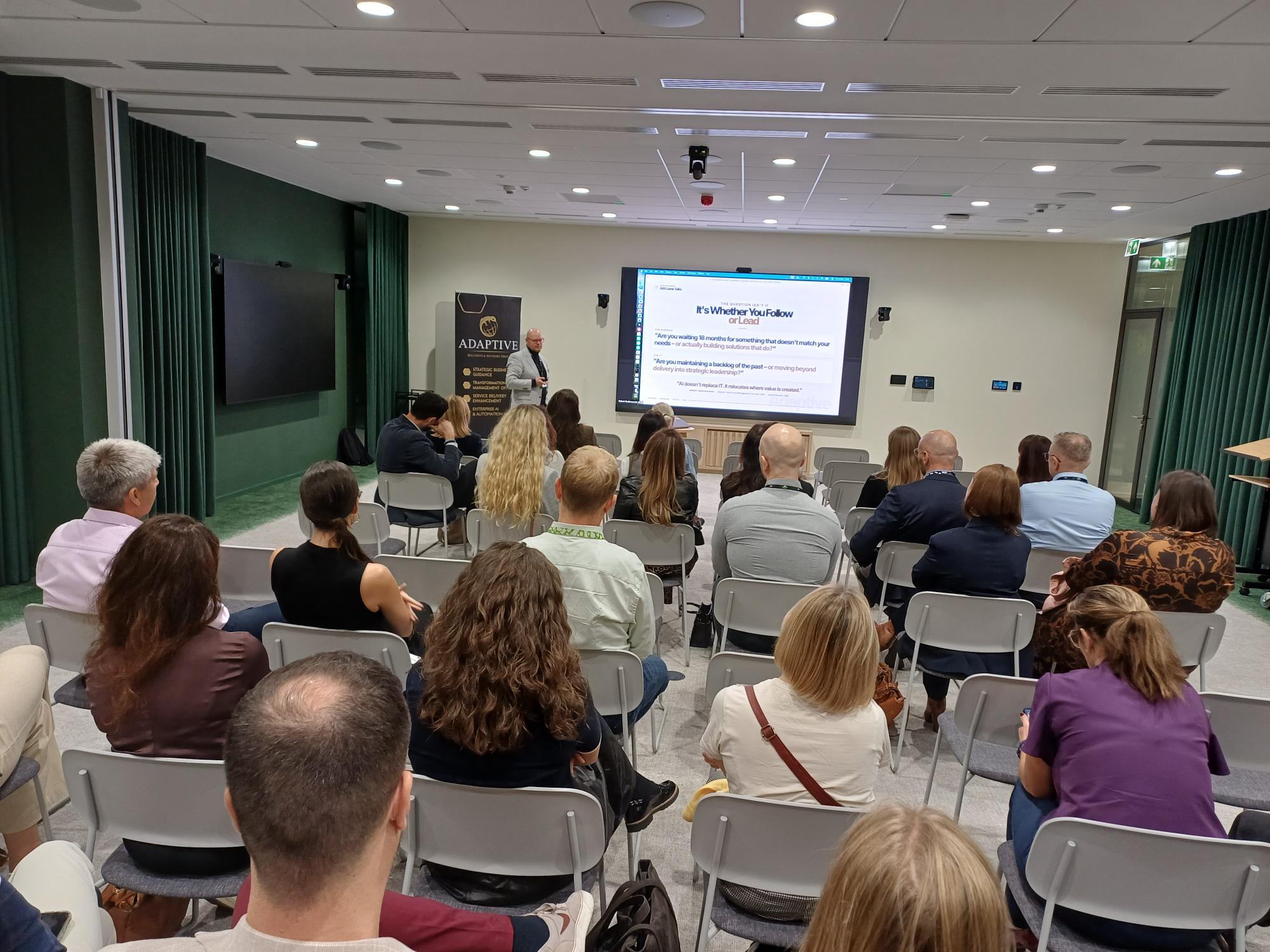
Robert Godziszewski, Executive Business Director at Adaptive Group, opened the main programme with a sobering reality check. Around 70% of IT implementations fail to deliver what was promised. Bain reports that 88% of business transformations miss their original ambitions, Gartner estimates that 75% of ERP projects exceed their scope, budget or timeline, and research by Standish Group and Pendo suggests that 64% of software features are rarely or never used.
According to Robert, the root cause is rarely the technology itself. Only 20–30% of implementation success depends on technology, and the rest comes down to people and process. The classic delivery chain makes it worse. A business need passes through an IT ticket, a business analyst and a technical analyst before a developer starts coding. Every handoff adds noise, delay and drift, and the business often waits 6 to 18 months for a tool that was “technically correct but functionally useless.”
AI changes this equation. With AI-assisted, no-code and low-code tools, GBS Operations can build solutions themselves, matching exact requirements from day one and deploying in days or weeks rather than months. The talk cited 3–5× faster delivery and natural adoption, because the people who build a tool are the people who use it. A finance team building an AP reconciliation tool with Copilot and Power Apps in two days, after the same request had waited six months in the IT queue, illustrated the point.
Robert was clear that this does not mean “IT disappears.” Roles evolve. Traditional developers, business analysts, technical analysts and application maintainers see demand shift towards DevOps engineers, cloud and infrastructure architects, cybersecurity specialists and a new kind of role: the AI and Automation Governance Lead. IT moves from builder to strategist. It builds the guardrails, owns the platform, and validates and deploys what the business creates. In his words, for strong IT professionals this is not a demotion but a promotion to strategic architecture.
The practical roadmap he proposed has three horizons:
- Today: acknowledge the shift, start small and low-risk pilots, and open the dialogue between IT and the business.
- In 6–12 months: establish governance for AI-built applications, upskill IT towards DevOps and cybersecurity, and define what the business can build and what IT must validate.
- In 1–3 years: business-led development becomes the standard model, and IT operates as a platform team rather than a development shop.
His conclusion: “The technology is ready. The organisations are not.” The question for both sides is whether they will follow or lead.
Hiab’s bottom-up automation journey
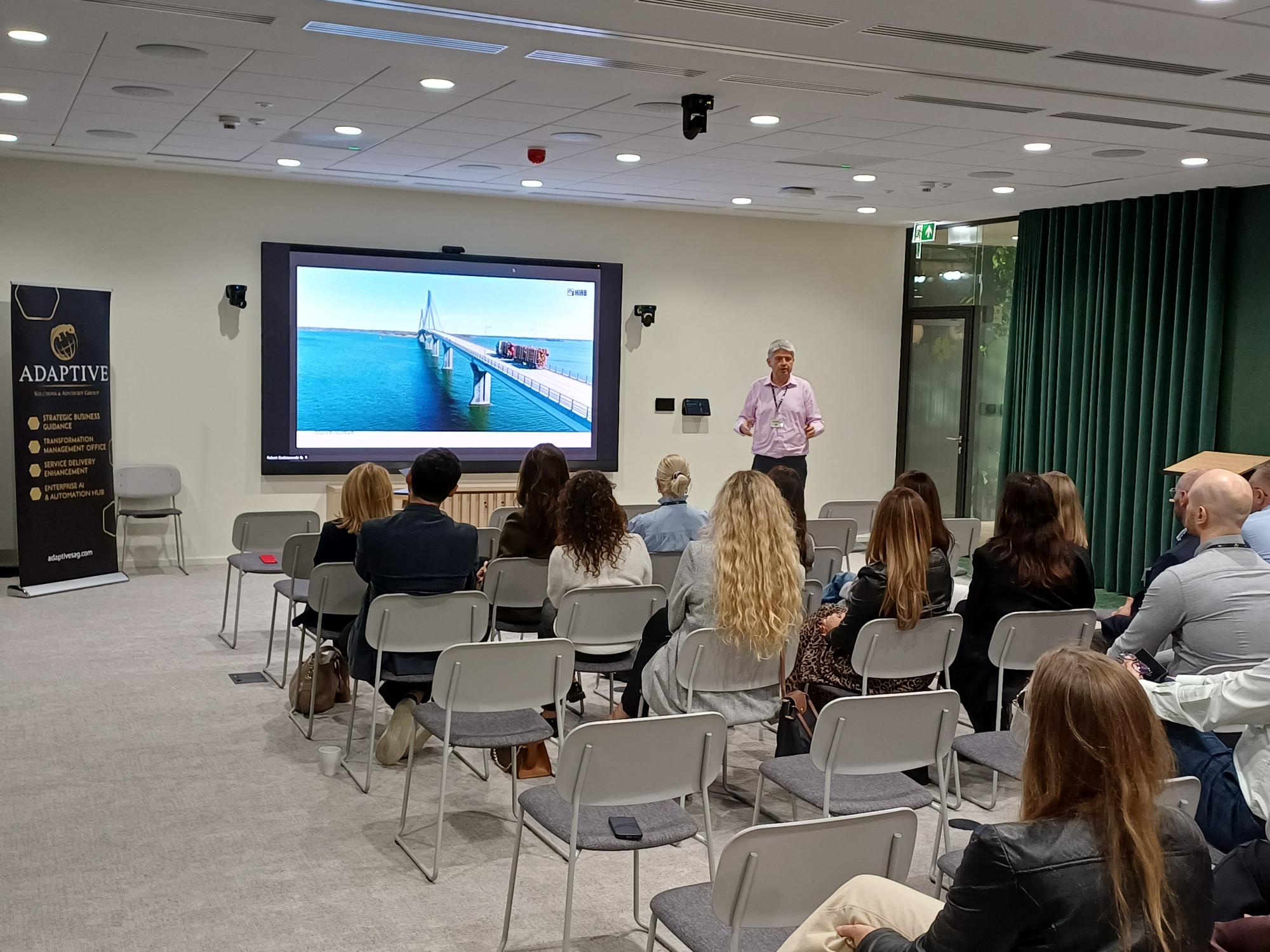
Marek Nowak, Customer Experience Support Center Director at Hiab, showed what the shift looks like in practice. Hiab is a global leader in load handling, with around EUR 1.6 billion in sales, 5,200 employees and a presence in more than 100 countries. Its CX Support Center in Gdańsk has grown since 2021 from a start-up team into a multilingual hub of around 60 people covering 9 languages and 14 functions.
The foundation of Hiab’s approach is a Process Management Framework: a six-layer model that moves from process overviews and swimlane flows to SOPs, knowledge sharing, automation and a culture of excellence. To date, the team has created 130 process maps and 189 SOPs. A Lean training programme has certified a growing group of employees, who celebrate new Lean Yellow Belts together.
Automation follows a clear path, from idea submission through case assessment, waste identification, technology choice, new process design, coding, user feedback, UAT, documentation and training, up to go-live. The results are visible. Close to 190 initiatives have been delivered since 2022, and cumulative savings are heading towards 20 FTE by the end of 2026. Examples include warranty processing, purchase order creation, ProCare contract creation, partner email notifications and data cleansing. The team builds with a practical, in-house toolkit that includes Python, AppSheet, Apps Script, BigQuery, Looker Studio and GitHub.
Looking ahead, Hiab is extending support to Finance & Accounting and HR and strengthening cooperation with the US. It is introducing a server environment to orchestrate RPA and manage versions, and it is deepening collaboration with IM and Global Process Owners. The next step is the AI journey, informed by lessons from an AI proof of concept for technical documentation. Marek’s key lessons concerned project selection, data preparation and the importance of contextual data. He was also open about the challenges: retention in a competitive talent market and building deep technical knowledge of the equipment.
Arla’s model: Business-IT partnership through LATs
The final presentation came from Maciej Obuchowski, GSS Automation and Analytics Manager at Arla, who told the story from the business side. The business, he argued, has always built its own solutions. First came personal checklists and manual workarounds, then Excel trackers and VBA macros (the Shadow IT era), then citizen development with Power BI, Power Apps and Power Automate. The next challenge is AI and enterprise-scale solutions, where enterprise data, governance, support and continuity matter more than ever.
Arla’s answer is the Local Analytics & Automation Team (LAT). A LAT brings people who understand the business together with the tools, data and support of IT. It runs on three ingredients: local ownership (“you build it, you own it”), close collaboration with IT product teams, and a shared technical foundation, namely a shared Databricks workspace for data and analytics and a dedicated Power Platform environment for automation.
For GSS, this closes the digital delivery gap. Local automation offers speed, process expertise and business ownership, but it carries operational risk and is hard to support or scale. Enterprise IT projects offer governance and robust platforms, but they bring long delivery cycles and no dedicated GSS prioritization. The LAT combines the strengths of both: faster delivery, lower operational risk, lower cost and access to enterprise platforms and data.
The GSS team behind it is deliberately lean, with five FTEs: a manager, two automation specialists and two data analysts. They work on premium, governed environments with dev, test and prod separation, SAP data access and an AI toolbox that includes AI Builder, Copilot Studio agents and Microsoft 365 Copilot.
The vision for the future GSS is ambitious. Standard cases are handled end to end by AI and automation (classify the request, extract document data, retrieve SAP and enterprise data, apply business rules, execute), while people focus on exceptions, controls and process improvement. An “exception cockpit” surfaces only what needs human judgment: low confidence, missing data, failed rules, policy decisions and financial or compliance risk. Ticket, order and allocation automation are already in motion.
Key takeaways
Across all three talks, a consistent message emerged. Technology is no longer the main constraint, and organizational readiness is. The organizations that will lead are those that:
- put building capability closer to the people who know the process,
- redefine IT’s role as the owner of platforms, security and governance,
- invest in clear ownership, upskilling and change management, and
- measure success by adoption and business outcomes rather than by the number of projects delivered.
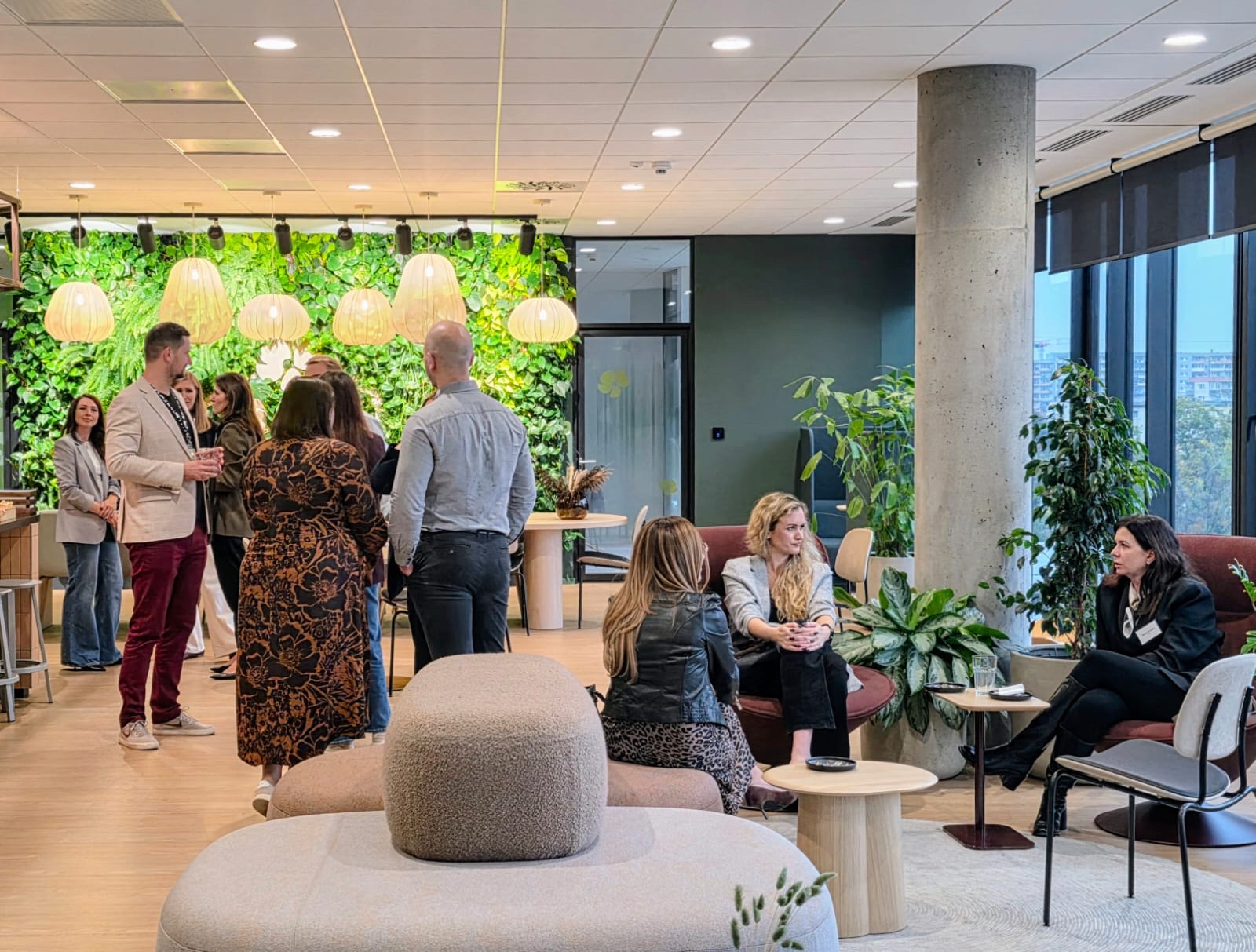
The evening closed with open networking, where the conversation continued well beyond the formal programme. We invite you to take a look at the presentation GBS Lions’ Talks_2026.10.08 .
Thank you
We would like to thank Arla Foods for hosting us in Gdańsk, ABSL for co-organizing the event, and our speakers Artur Świętoń, Marek Nowak and Maciej Obuchowski for their openness and practical insights. Thank you also to everyone who joined us on the evening.
Adaptive supports GBS organizations on exactly this journey, from automation strategy and roadmap development to end-to-end AI and automation implementation and digital workforce management. If you would like to discuss how to prepare your Operations and IT teams for what comes next, get in touch with us.