Posted on: May 08, 2026
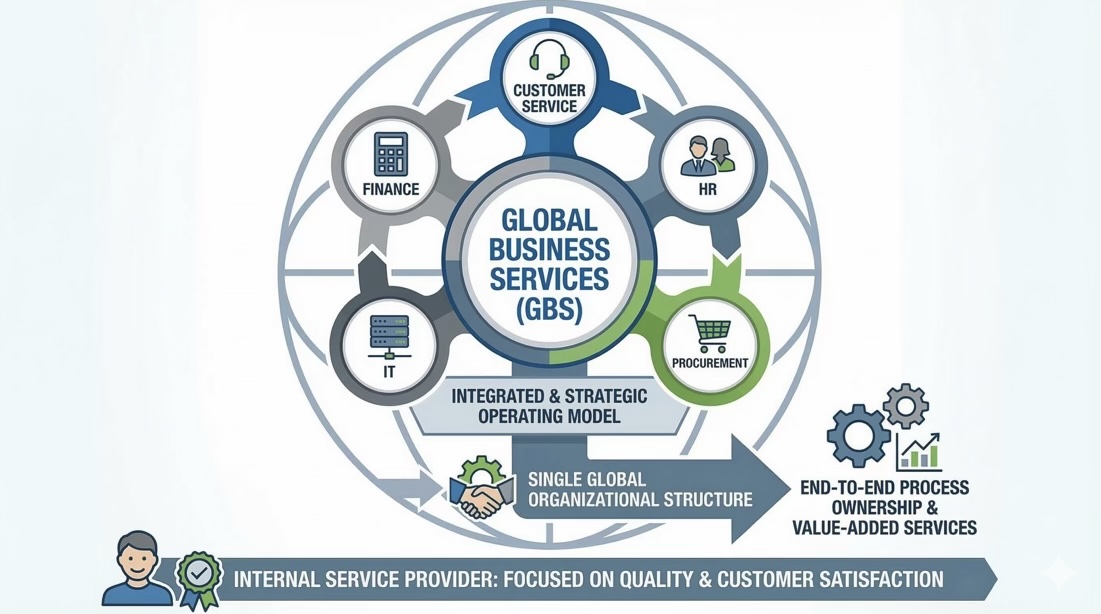
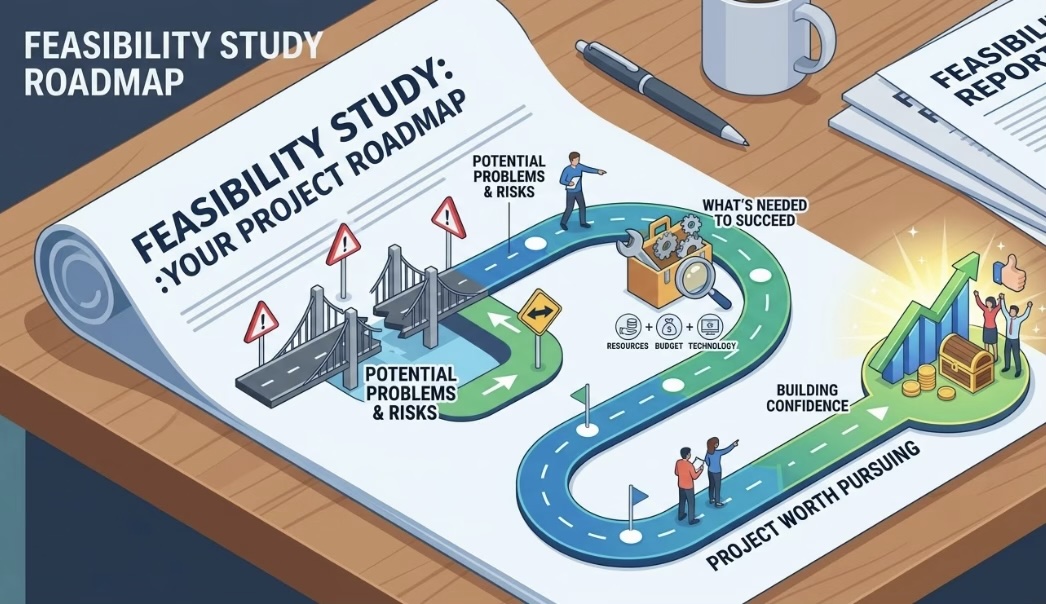
A Global Business Services (GBS) feasibility study assesses if a proposed transformation—such as centralization, automation, or restructuring—is viable, cost-effective, and aligned with strategic goals before investing resources. Key steps include analyzing financial, technical, and operational readiness, conducting stakeholder interviews, evaluating culture, and identifying risks to determine a “go/no-go” decision.
Key Components of a GBS Feasibility Study
- Strategic & Financial Assessment: Validate the business case, including projected bottom-line savings, ROI, and cost-benefit analysis of process centralization or expansion.
- Technical & Operational Readiness: Evaluate existing systems, technology, and infrastructure capabilities to support the new model.
- Cultural & Organizational Alignment: Assess the organization’s appetite for change, leadership alignment, and employee capacity for transition.
- Risk Analysis & Mitigation: Identify potential roadblocks and develop contingency plans.
Steps to Assess Readiness Before Major Change
- Define Scope and Objectives: Clearly define the change, its impact, and the desired future state.
- Conduct Preliminary Analysis: Perform an initial, high-level review to determine if the project is worth pursuing.
- Engage Stakeholders: Interview leaders and stakeholders to gather input, define expectations, and assess support.
- Evaluate Data & Technology: Analyze current data capabilities to support new, centralized processes.
- Analyze Resource Capacity: Determine if there are enough skilled resources to support the change and sustain it over time.
- Perform Cost-Benefit Analysis: Quantify potential financial benefits against implementation costs.
- Finalize “Go/No-Go” Decision: Review all data to make an informed decision on whether to proceed.
Effective GBS Readiness Metrics
- Process Maturity: How standardized are current processes across different locations?
- Technology Readiness: Are systems ready for shared, standardized, and automated workflows?
- Talent Availability: Does the workforce have the necessary skills for a GBS model?
Performance Metrics: Transition from traditional service level agreements (SLAs) to value-added KPIs.


Assessing Change Readiness: Steps for a Successful Transition
Assessing Change Readiness is crucial for successful organizational transformation. But what is Change Readiness and what are steps to evaluate it and avoid pitfalls in change management?
You wouldn’t start a car journey before checking your fuel gauge. In the same way, beginning any major organizational transformation, such as entering a new market, undergoing a merger or transferring to a new leadership, should be preceded by a change readiness assessment. Transforming a company involves many complex moving parts, from operational processes to culture and leadership, and is notoriously difficult – only 30% of change management processes actually succeed. Conducting a change readiness assessment ensures you’re aware of your strengths and limitations, so your transformation process has every possible chance of being one of the success stories.
What is Change Readiness?
What exactly do we mean by ‘change readiness’? Predictably enough, it’s about being ready for an upcoming change. But while the name is straightforward, whether your organization is ready or not isn’t a simple yes or no question.
Change readiness means having the will, the skill and the strategy to make transformation successful. It comprises many parts, large and small, from the frontline workers being trained in new processes, to the leadership team’s ability to motivate, to the effectiveness of internal comms, to the overall health of the company culture.
That’s where change management comes in. To be ready for change, employees and leadership need to be aligned on what the change process involves. People must be receptive to the transformation and willing to make it happen, and they need the right resources and a clear plan for getting it done.
The Importance of Change Readiness Assessment
Determining your organization’s ability to manage change involves analyzing many different aspects of the business, covering areas like leadership, culture and internal communications.
Any one of these components could present a barrier to successful transformation, which is why it’s important to take stock of your current capabilities with a change readiness assessment. Doing so will give you a strong foundation for change management.
Change readiness assessment can identify what needs to be done to be transformation-ready, and help you understand where the risks lie so that you can minimize them as much as possible before embarking on change. It may even result in a decision to postpone or adapt your plans until you’re in a stronger position.
It’s also worth noting that major transformation isn’t always planned. Change can come in the form of a crisis, so it can be valuable to have a change readiness assessment in place so you understand your capabilities even when no big events are expected.
Risks of Neglecting Change Readiness
Changing something as complex as a company isn’t an easy ask, which is why change management processes have emerged to help steer organizations towards success. Even so, a good outcome is far from being guaranteed.
In fact, a startling 70% of change management projects fail. Without a change readiness assessment and a robust change management process, you run the risk of undergoing transformation under-prepared. This can lead to wasted resources, poor employee experience, high costs that outweigh any benefits of the change, and even a failure to make the change happen.
In the worst case scenario, it can even spell the end of your business. For example Blockbuster Video, once a household name, found itself unable to keep up with the industry changes that followed the mainstreaming of the internet in the early 2000s. The company went bankrupt in 2010 and today has just one remaining retail location.
How to Assess Change Readiness?
Assessing change readiness should be systematic, following a step-by-step approach to make sure everything is covered and the knowledge you gather can be captured and distributed effectively.
Step 1: Evaluating Current Organizational Culture
Your organization’s culture is deeply connected to its values, which inform how business is carried out and how people behave at work. In assessing readiness for change, you need to gauge how closely the current culture lines up with the proposed transformation.
For example, does your culture value innovation, or does it emphasize tradition? How competitive is the culture? Do people share ideas freely, and do they feel psychologically safe when doing so? It’s important to understand the culture as a whole, but also to home in on areas that are especially relevant to the developments at hand. If the change is externally imposed, for example, there may be less scope for innovation to play a part, whereas adapting systems and policies becomes crucial, as noted in the Project Management Institute’s whitepaper on change readiness. For this step, define the scope of your analysis carefully to make sure you stay close to the relevant aspects of culture.
Step 2: Employee Engagement and Feedback
Employee feedback can be a treasure trove of insights during a change readiness assessment. For example, it can…
- help reveal your people’s receptiveness to potential change, and the kinds of objections they might raise
- capture ideas that are valuable for future planning, should your change management process go ahead
- assess current levels of employee engagement, and measure the drivers of engagement, some of which might be impacted by new ways of working
- identify skills gaps that represent a risk and training opportunities that could strengthen change readiness
- reflect employee satisfaction with tools, resources and work environment, indicating how prepared they are to manage change
Step 3: Resource and Capacity Analysis
Few businesses have the option of suspending their day-to-day operations in order to carry out a major transformation. Business as usual needs to continue, which means the capacity available to devote to the change process might be limited.
When gauging your resources and capacity, you also need to consider the knowledge capital and training level among your current employees, and whether their existing skills can be adapted to new ways of working, new systems or tools.
Financial resources fall under this category too. That might mean assessing the liquidity available for extra purchasing and procurement, or analyzing where costs can be saved or existing budgets redistributed to support the transformation process.
Assessing Organizational Readiness for Change
To understand your organizational readiness for change, you need a holistic view of your company. So it makes sense to do your assessment bottom up, starting with discrete parts of the business such as departments or functions, and then summarizing what you’ve learned to build up the bigger picture of overall organizational readiness for change.
Writing in the academic journal Implementation Science, Bryan J. Weiner emphasizes the human side of things, defining organizational readiness for change as “a shared psychological state in which organizational members feel committed to implementing an organizational change and confident in their collective abilities to do so.”
This illustrates how assessing organizational readiness for change involves building a big picture based on cumulative knowledge. For that picture to be rosy, intention and confidence must be present at each level of the business.
Indicators of Readiness for Change
Hallmarks of change readiness can be divided into two categories – the actions and attitude of leadership, and the potential for processes to adapt.
Leadership Support and Commitment
Leaders act as role models for employees, which makes them powerful agents of change.
When leadership is wholeheartedly committed to the transformation process and demonstrates excitement and enthusiasm for change, there is more chance employees will follow suit. A leader with a love of innovation and disruption can contribute to change readiness by modeling it through their words and actions.
Leaders can also play an important role in communication. As champions of a proposed transformation, they can help employees understand the rationale and the benefits a change will bring. A leader with the ability to communicate big ideas effectively can help push changes through. Even more importantly, their ability to listen and respond will help build trust and adaptability during the transformation process.
Listening leaders make actively listening to employee voices a foundational part of their leadership strategy. Listening leaders are continually open to new ideas, and they maintain a clear view of what is happening in their companies and wider industry at all times. For these reasons, being a listening leader is an automatic head start in change readiness assessment. And because they are tuned in to what is happening both inside and outside the company, listening leaders are always ready to adapt and are powerful agents of change when transformation is required.
Flexibility and Adaptability of Organizational Processes
Changes frequently involve an organization’s processes – for example, moving from a legacy customer relationship platform to one that incorporates AI assistance for employees. For processes to be adaptable, they need to be clearly defined and understood by employees, and to be consistent across the organization, so that every transformation begins from a clear baseline. They should also have adaptability designed into them so that they can be easily modified, rather than needing to be rebuilt from scratch.
Leveraging Idea Management Software in Change Readiness
Understanding employee thoughts, perspectives and attitudes is critical to maintaining employee engagement, which in turn is a prerequisite for successful change. When employees are asked to voice their thoughts and feelings, a dialogue is opened between leadership and workforce. Employees who feel listened to and see their suggestions being taken on board gain a greater sense of ownership within the business, which can be a powerful catalyst for engagement.
As well as fostering engagement, employee listening and feedback also highlights where change may be needed. It can indicate where passion, concern or enthusiasm lies, helping management refine its change management strategy and make it more effective. Idea management software like Sideways 6 helps you share and explore employee feedback on a collaborative and continuous basis.
Because Sideways 6 works through the channels employees are already using, such as Teams and Interact Intranet, it’s easy to contribute when ideas arise, and it offers a natural opportunity for communication.
Conclusion
Change readiness assessment isn’t just an important first step for change management. It’s a way to take the pulse of your organization’s versatility and adaptability, and an opportunity to gauge employee experience and the drivers of engagement. It can help you reassess your processes and stress-test them for adaptability. Most importantly, change readiness assessment provides a diagnosis of your risks and opportunities, highlighting how you can strengthen your organization for the future.
How to Conduct a Change Readiness Assessment (Template Included)
The adage says nothing is constant but change. It might be a cliche, but those who ignore it are doomed to learn a lesson the hard way. When managing projects, change management helps to avoid its negative effects, and a change readiness assessment is one of the ways how it does this.
Being prepared for change helps to mitigate the risks associated with those changes. The first step is understanding what is a change readiness assessment and how and when to conduct one. We’ll go over that and the benefits of a change readiness assessment, including a free template to use when managing projects.
What Is a Change Readiness Assessment?
A change readiness assessment is a way to understand whether an organization or project is prepared for a specific change. It’s a means to know if the organization’s or project’s ability to initiate, follow through and maintain lasting changes.
This is done through a process of analysis that touches the organization or project at all levels. It must be a holistic assessment to be effective. That means considering everything from individuals in the organization to working groups, teams, departments, divisions, sectors, organizations, enterprises, networks, local and regional government and economy, national government economy and other stakeholders.
The professionals leading a change readiness assessment will then use those results as a way to inform a project plan that will initiate the change in the organization. They consider factors such as conditions, resources and capacity, motivation, attitude and culture. Once they’re ready to implement that change, they’ll use project management software to plan, manage and track progress, costs and more.
ProjectManager is award-winning project and portfolio management software with multiple views to plan change and execute it collaboratively across the organization. Managers can plan the project to implement the change on powerful Gantt charts, which link dependencies to avoid costly delays, filter for the critical path to identify essential tasks and set a baseline to track progress, costs and more in real time. The plan can be shared on task lists and kanban boards for the team to manage their work and stakeholders can use the calendar view to get an overview of the project. Get started with ProjectManager today for free.
When to Conduct a Change Readiness Assessment
Doing a change readiness assessment can occur at any time. If there’s a change coming, an organization wants to be prepared. This is done by first making a change readiness assessment. It’s most commonly used before the implementation of an organizational change.
The change readiness assessment is a great tool to identify areas of improvement and find the strengths and weaknesses in the organization and then plan to change them to make improvements to the overall organization.
Conduct a change readiness assessment to identify potential challenges and address them before they become issues that impact the organization. Another reason to conduct a change readiness assessment is to prepare the organization’s workforce to better understand the organization’s needs.
Change Readiness Assessment vs. Change Impact Assessment
A change impact assessment is a process organizations use to understand the potential impact of proposed changes on their business. It’s part of the larger change management process and compares the current and future states of change to identify what’s changing, who’s impacted and what those impacted need to know.
How to Conduct a Change Readiness Assessment
Now that the definition of a change readiness assessment has been made clear and when an organization will want to conduct one has been explained, let’s look at the steps for a thorough change readiness assessment.
1. Define the Purpose and Scope of Your Change
To properly assess the change and an organization’s readiness to respond, that change first has to be defined. Understand all the elements and stakeholders, the purpose of the change and what the scope of change will be over a timeframe. Be specific to more accurately assess the ability of the organization to adopt the change.
2. Ensure Strategic Alignment
Change should only be adopted if it aligns with the overall strategic plans of that organization. That is, the change should be harmonious with all departments, teams, processes and systems to work together towards a common goal. If the change is too disruptive to the organization’s strategic plans, it should be avoided.
3. Estimate the Potential Benefits and Risks of Your Change
Another thing to consider is the benefits of implementing that change and also identifying any risks it might pose to the organization. Listing the benefits allows managers to monitor that they get those benefits. If there aren’t enough benefits or too many risks involved then maybe the change isn’t worth it. If the risks are worth taking, they must be identified and tracked until mitigated.
4. Conduct a Gap Analysis
One way to be prepared for change is by conducting a gap analysis, which is a process that compares the current state with the desired future state. This is done to identify gaps and determine how to get from the current state to the future one.
5. Identify Resource Requirements of the Change
When the change readiness assessment is done and a plan is being put in place to implement those changes, managers will have to think of the resources they’ll need to execute the plan. Resources are anything needed to execute project tasks, from people to equipment, tools, money, facilities and raw materials.
6. Make a Change Readiness Matrix
A change readiness matrix is a visual tool that compares and contrasts the readiness of an organization from the perspective of different stakeholder groups. It can identify strengths and weaknesses, gaps in each group and prioritize actions to be taken. Once done, it’s also a great tool for communicating findings to stakeholders.
7. Map Stakeholders and Gauge Their Resistance to Change
Change is going to impact more than the operation and its teams, but the stakeholders who are invested in the organization. Therefore, it’s critical to map those stakeholders to identify them and their relationship with the organization. One of the major aspects of mapping stakeholders is to see how open or not they are to that change. This information is critical to the successful implementation of those changes.
Key Benefits of Assessing Change Readiness Before Implementing an Organizational Change
There are many reasons why an organization must conduct a change readiness assessment before implementing organizational change. Here are just a few reasons.
Prepares Your Organization for Any Potential Risks or Issues
There are always changes on the horizon or challenges that an organization has to face. A change readiness assessment prepares the organization for those changes and identifies obstacles and risks, so the organization can set up plans to mitigate or take advantage of those changes.
Ensures Stakeholder Satisfaction & Organizational Alignment
Since the due diligence is done with stakeholders before implementing or responding to change, managers know how they’ll react and can tailor their actions to ensure the stakeholders’ satisfaction. Without that process, stakeholders can be blindsided and never on board with the change. At the same time, a change readiness assessment makes sure that the change will align with the larger strategic initiatives of the organization.
Helps Accurately Estimate the Expected Timeline and Costs Related to the Change
Creating a plan to implement or respond to the change means understanding the resources, costs and timeline involved. This allows that change to be managed and not grow out of control, which can be financially dangerous as well as a long-term strain on the organization.
Change Readiness Assessment Questionnaire
One component of a change readiness assessment is asking questions. Using a change readiness assessment questionnaire helps organizations evaluate their preparedness and ability to navigate change. It also helps to see how well the organization is controlling change when it’s already in the works, which allows for adjustments to make the most of those changes. Here’s a list of some commonly asked change readiness assessment questions.
- What is the purpose of the change?
- What are the expected benefits of the change?
- What are the potential risks related to the change?
- What is the risk tolerance of your organization?
- What is the current state before the change?
- What is the desired state after the change?
- How will this change be implemented?
- What change management documentation will be utilized?
- Who will participate in the change implementation process?
- Who is the executive sponsor for this change?
- Who are the members of the change management team?
- What resources will be needed to implement the change?
- Are there enough resources to sustain the change over time?
- Who are the stakeholders for this change?
- How will stakeholders be informed about the change?
Change Readiness Assessment Template
To facilitate the change readiness assessment process, download this free change readiness assessment template for Word. It’s a simple document that captures questions for various topics with space for a numerical response.
The free change readiness assessment template for Word is broken up into categories, including sponsorship, stakeholder management, readiness and training. The numerical rating is one through six, with one being “strongly disagree” and six being “strongly agree.”
Free Change Management Templates
The free change readiness assessment template is only one of over 100 free project management templates for Excel and Word that can be downloaded to help manage every aspect of a project across multiple industries. These are some of the free templates that are related to change management.
Change Log Template
A change log is a document that captures change as it happens and allows managers to track the change until it’s put to bed. This free change log template for Excel lists the change, who it’s assigned to, the priority, the expected resolution and much more.
Change Request Template
Use this free change request template for Word to prepare, equip and support change. This free template allows managers to ensure that the change being implemented is thorough and smoothly done.
Change Order Template
This template is often used in construction projects but can be used in any industry to capture any modifications to the scope of work in a project. The change order template for Excel explains the opportunity of the change, its reason, duration and more.
Project Manager Identifies and Controls Change
Change management can be done with templates, but it’s not ideal. Templates are static documents that must be manually updated. That takes time away from more important tasks, such as implementing the change. Responding to change is also a collaborative process and templates that are standalone documents are notoriously difficult to use for collaboration. To better manage change requires a more efficient model of project management software.
ProjectManager is award-winning project and portfolio management software that can respond to change by planning on Gantt charts and sharing those plans on kanban boards and list views that update automatically to keep everyone on the same page. But that’s only the start of the benefits of using ProjectManager.
Track Change, Risk and Issues
Risk comes with change and being able to identify and track those risks until they’re resolved is a critical part of change management. Use our risk, issue and change task cards to manage those things in real time. The cards collect vital information, such as due date, priority, assignee, response, description, tags, resolution, impact and likelihood as well as attaching comments and files as teams collaborate on identifying risk or managing issues and change.
Monitor and Report on Progress, Cost and More
As change is implemented or resolved, those actions must be monitored to ensure that they’re not delaying the project or causing excess costs that the budget can’t contain. Managers can get a high-level overview of the project with real-time project or portfolio dashboards, which automatically collect live data and display them on easy-to-read charts and graphs that show time, cost, workload and more. For more details, use customizable reports on project or portfolio status, variance, timesheets and more. Then share reports with stakeholders to keep them updated.
What is a Change Readiness Assessment?
Change readiness is the level to which an organization is prepared, willing and able to implement change. This concept has three elements:
- Organizational readiness – This covers factors like having a change infrastructure, available resources, a committed sponsor and clear objectives for the change.
- Open attitudes toward change – This measures the organization’s level of understanding and willingness to change. These attitudes affect success with employee resistance management, which should be based on building change readiness.
- Individual readiness – This aspect measures if individuals, on a personal level, are ready, willing and able to embrace and implement change.
A change readiness assessment is a systematic evaluation of an organization’s preparedness for implementing significant changes. It examines critical areas of the organization like culture, awareness, employee readiness and leadership commitment.
Practitioners use the information from readiness assessments to help in change management planning. With the information they obtain, they can prepare a change management strategy that fits both the change and the organization’s unique needs. This includes:
- Selecting a change management governance model and team size
- Selecting a Sponsorship Model and support system
- Assessing the risks and identifying potential obstacles
- Determining if any unique tactics are necessary to support this change
- Customizing the Communications Plan, Training Plan, People Manager Plan and Sponsor Plan
Organizational readiness assessments, as part of a structured change management approach, also help identify potential risks and root causes of resistance so practitioners can create plans to better equip the organization.
This is crucial in an era where 52% of executives and 43% of employees felt that their organizations were not adequately prepared for change.
As organizations recognize the importance of being adequately prepared for change, the role of data collection becomes integral in readiness assessments.
When the change is led by an internal team, including managers from different departments, the data required for readiness assessments might be easier to collect. Managers might already have the needed insights about the change’s characteristics and organizational attributes. You may only need to collect a subset of employee data to augment the existing team knowledge.
However, most modern organizations work with external change practitioners, who are experts in their field, to create an efficient change implementation process. These advisors guide the entire change management function by implementing a comprehensive framework, like the Prosci Methodology.
Change practitioners collect data using multiple models and assessment tools, including the ADKAR® Blueprint, risk assessments, employee and manager interviews, and surveys.
How to Effectively Conduct a Readiness Assessment for Organizational Change
Although every organization has unique requirements while assessing its change readiness, you can use the following steps as a general guide for your readiness assessment:
1. Assess the change
The first step in a readiness assessment is defining the scope, depth, and overall size of the change. This assessment should address:
- Type of change – Identify whether the change involves processes, technology, organizational structures, job roles, mergers or strategic redirection.
- Scope of the change – Determine whether the change affects a workgroup, department, division or the entire enterprise.
- Number of employees impacted – Assess how many individuals the change will directly and indirectly affect.
- Amount of change – Evaluate how significant the change is compared to the current state.
This initial change management assessment lays the groundwork for developing a targeted change strategy. Practitioners must go beyond the basics and deeply understand how the change will impact employees and stakeholders.
Prosci’s 10 aspects of change impact empower practitioners to focus, dissect, and document an individual’s journey through transition. This framework covers 10 crucial factors of an employee’s experience that are affected by change, including:
Processes – The steps or actions needed to achieve specific outcomes, such as changes in client engagement protocols.
Systems – The integration of people and technology to meet objectives, exemplified by the implementation of a new CRM system.
Tools – The specific items or implements used, which can be physical objects or technical tools.
Job Roles – The responsibilities and competencies required, like shifts in client service duties.
Critical Behaviors – The vital or essential responses of an individual or group to an action, environment, person or stimulus.
Mindset/Attitude/Beliefs – The mental inclinations, dispositions, or frames of mind reflected in behaviors, such as transitioning from a transactional to a relational customer service approach.
Reporting Structure – The authority relationships in a company or organization; who reports to whom.
Performance Reviews – The process and indicators of how performance is measured and assessed relative to objectives.
Compensation – The monetary and nonmonetary rewards, such as adjustments in bonus plans.
Location – The physical geographical place that provides facilities for a stated purpose.
By assessing these aspects, practitioners can better understand how changes impact employees, facilitating smoother transitions and higher adoption rates. This detailed focus ensures that each element of the change is addressed, leading to more effective change management outcomes.
2. Assess leadership styles and identify sponsors
Because sponsorship and management support is a top factor for successful change, it’s important to thoroughly assess the leadership styles and power distribution in your organization.
Change teams must examine senior leadership and managers to determine whether they’re committed to change, equipped to lead it, and capable of motivating others to embrace new ways of working.
Assessing executives and managers also helps identify the primary sponsor who will lead the change. A coalition of sponsors representing different groups of impacted individuals supports the primary sponsor.
Practitioners can also have one-on-one interviews with leaders and managers to gather insights into readiness and current processes, systems and hierarchy. This data can help identify potential obstacles and root causes of resistance.
3. Analyze organizational culture
Culture and value systems play a major role in how an organization reacts to change. In our Best Practices in Change Management – 12th Edition report, 87% of participants said cultural awareness was important or very important to a change management initiative.
Recognizing the influence of cultural dimensions can guide practitioners in tailoring their change management strategies effectively.
There are six primary cultural dimensions that impact change management: assertiveness, individualism versus collectivism, emotional expressiveness, power distance, performance orientation and uncertainty avoidance.
Assessing these prevailing norms, values and behaviors can help practitioners understand how an organization might react to change. This, in turn, allows practitioners to prepare strategies for engagement and effective communication.
For example, in organizations with a culture of low assertiveness, communication about change often becomes indirect and ambiguous. This can hinder effective engagement, as feedback mechanisms may fail to encourage direct and honest discussions, leading individuals to shy away from addressing challenging topics.
By identifying these challenges early, practitioners can proactively develop strategies to address them. This foresight allows for tailoring communications and other change management plans, significantly enhancing the likelihood of achieving successful outcomes.
4. Examine organizational change capacity
Organizations have a limited capacity for change. If your organization is already experiencing significant change, introducing additional changes can become increasingly challenging.
Change saturation occurs when organizations simultaneously implement change initiatives without adequate planning and prioritization. When employees are bombarded with changes without proper guidance from leadership, it leads to change fatigue, negative work culture, poor adoption, and increased employee turnover.
To prevent this, you can work with expert change professionals to implement the Prosci Change Management Portfolio process. A change management portfolio is a structured approach to managing multiple change initiatives simultaneously, ensuring alignment with organizational goals and efficient resource allocation. The change management team can also use other strategies for reducing change saturation, such as creating, scrutinizing and prioritizing initiatives to mitigate saturation.
Practitioners should also examine previous change management experiences. Past changes may have left residual effects that could work in their favor or make change management more challenging. Your organization’s history is part of your starting point when managing change.
5. Focus on employee readiness
Employee readiness gauges how prepared and able employees are for change. It also indicates whether you can expect high or low employee resistance, and the root causes behind the resistance. Understanding these factors is crucial for tailoring your approach to effectively manage and support your people through transitions.
Implement employee data-gathering carefully and in context with a good change management framework. When collecting data, three areas are important:
- Employee perceptions of the organization’s readiness for change
- Employee personal readiness for change in general
- Employee understanding of the change itself and how they perceive the personal impact of that change
The last area must be timed carefully with the overall change management communications plan and the project team’s readiness with details about the change. In particular, they will need to answer “What’s in it for me?” (WIIFM) questions from employees, who first assess change in terms of personal impacts before relating to the broader effects on the organization.
The ADKAR Assessment, which leverages the Prosci ADKAR Model, is an excellent readiness assessment tool for collecting employee data and identifying gaps in the individual change process.
Prosci ADKAR Model

The ADKAR Assessment is a questionnaire or survey that addresses every element of our ADKAR Model. It is distributed to all impacted individuals. Practitioners use this data to identify common trends, barrier points, and patterns that highlight gaps.
These insights enable change teams to develop targeted solutions that address gaps and support individual transitions, ultimately leading to the successful implementation of organizational change.
6. Understand the predisposition of people managers
In many organizations, people managers can have a high degree of control over their peers and employees. They may be strong leaders or feared by others.
They directly influence employee attitudes toward a change and play a significant role in the change management process. Our research shows that mid-level managers were the most resistant group, followed by front-line employees.
7. Assess communication
Clear communication helps ensure everyone understands the goals of the change initiative, their roles in achieving them, and the metrics being used to measure success.
Practitioners must assess the communications strategy to ensure that it:
- Is structured
- Is transparent
- Is customized for different employee groups
- Delivers through multiple channels
- Provides answers to employee questions
- Creates an open dialogue
To adequately assess your communication tactics, Prosci has a high-level 10-point Communications Checklist that you can use as your starting point to develop a more comprehensive Communications Plan.
8. Analyze the data and assess change readiness
Once all data has been collected, it’s essential to thoroughly analyze it to evaluate the organization’s change readiness. This involves reviewing information gathered from the various assessments, including the ADKAR Assessment, leadership evaluations, cultural analyses, and employee readiness surveys. By doing so, you can:
Identify readiness levels – Determine the organization’s overall preparedness, willingness, and ability to implement change. This includes assessing both organizational and individual readiness to identify potential strengths and weaknesses.
Spot trends and patterns – Look for common trends, barrier points, and patterns that may indicate areas needing attention. This could involve identifying prevalent resistance factors or cultural dimensions that might impact the change process.
Develop targeted strategies – Use the insights gained from the data to develop targeted strategies that address identified gaps. This might include enhancing communication plans, refining leadership support, or tailoring employee engagement efforts.
By systematically analyzing the data and implementing these strategies, you can effectively enhance the organization’s readiness for change, ensuring a smoother transition and greater success in achieving desired outcomes.
Use Readiness Assessments to Build an Effective Change Strategy
Conducting organizational readiness assessments with the right change management framework can be useful for planning your change management strategy. It also enables the project team to make informed decisions about their approach. It’s important to understand that the assessment process is a planning aid, not the bulk of the change management effort. As tools that help your team plan for the change, assessments should consume minimal time—just enough to inform good planning decisions.